
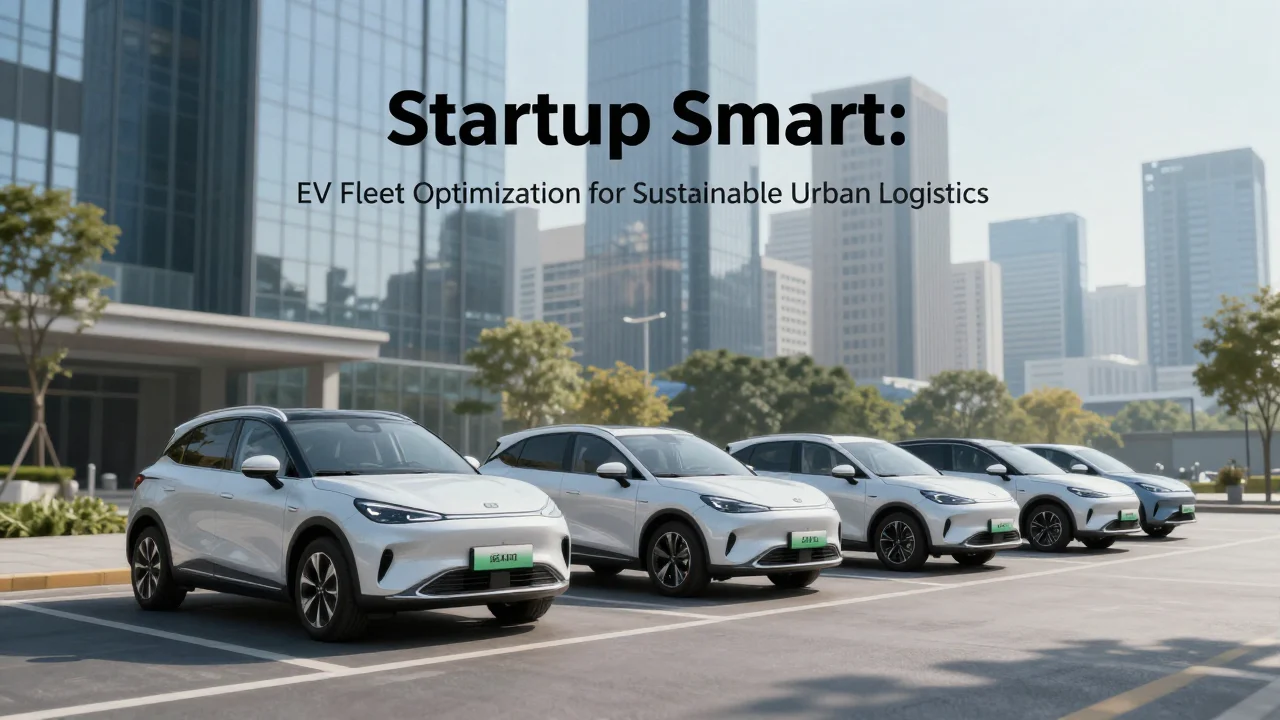

Powering Sustainable City Logistics: The EV Fleet Optimization Nexus
The pulse of our cities is driven by movement – people, goods, and services constantly in motion. Yet, this relentless activity comes at a significant cost: congestion, pollution, and inefficient energy consumption. As urban populations swell and e-commerce booms, the last-mile logistics challenge intensifies, placing immense pressure on both infrastructure and the environment. The imperative to electrify urban fleets is undeniable, but it introduces a new layer of complexity: how to manage energy demand, optimize charging, and ensure operational efficiency in a sustainable manner.
This is where a profound opportunity lies for a lean, expert-driven venture. As advisors to investors, we identify a critical gap in the market that can be addressed by a focused team with highly specialized skills and a modest initial investment. Our proposed business idea focuses on creating a Smart Fleet & Grid Integration Platform specifically designed for urban logistics companies transitioning to or operating electric vehicle (EV) fleets.
The Idea Explained: SmartCharge Urban Fleet Optimizer
Our business, which we’ll call the “SmartCharge Urban Fleet Optimizer” for clarity (though we’d develop a proper brand later), will provide a sophisticated, data-driven platform that empowers urban logistics and delivery companies to maximize the efficiency, sustainability, and reliability of their electric vehicle fleets. It addresses the twin challenges of grid management and sustainable supply chain optimization, leveraging the founders’ unique expertise.
The Core Problem Solved:
Logistics companies face significant hurdles when adopting EVs:
- Charging Infrastructure & Grid Impact: Where to install chargers? When to charge to avoid peak demand and high costs? How to ensure grid stability with a growing EV load?
- Operational Efficiency: How to optimize routes considering range anxiety, charging stops, and delivery windows? How to manage battery health and vehicle uptime?
- Sustainability Reporting: How to accurately track and report carbon reductions and energy efficiency?
Our Solution: A Holistic Optimization Platform
The SmartCharge Urban Fleet Optimizer acts as an intelligent layer between a logistics company’s fleet management system, local grid data, and charging infrastructure. It integrates three key pillars:
-
Smart Charging & Grid Integration (Leveraging Grid Modernization/Smart Grid Expertise):
- Analyzes real-time and predictive grid load data to recommend optimal charging schedules for each vehicle, minimizing energy costs and mitigating strain on the local grid.
- Integrates with existing charging infrastructure (or advises on new deployments) to enable smart, dynamic charging based on vehicle needs, energy prices, and grid availability.
- Identifies opportunities for demand-side management, potentially enabling vehicle-to-grid (V2G) capabilities in the future to turn fleets into energy assets.
- Provides insights into current and future energy consumption patterns, helping clients plan for scalable electrification.
-
Sustainable Route & Fleet Optimization (Leveraging Sustainable Supply Chains Expertise):
- Develops optimized delivery routes that consider vehicle range, battery state-of-charge, available charging stations (both public and private), traffic conditions, and delivery time windows.
- Minimizes “empty miles” and ensures vehicles are efficiently utilized throughout their operational day.
- Monitors battery health and predicts maintenance needs, extending asset lifespan and reducing waste.
- Tracks and visualizes the environmental impact of the fleet, including CO2 emissions saved, energy consumed from renewable sources, and overall operational efficiency improvements.
-
Data Analytics & Advisory:
- Offers a dashboard that provides actionable insights on fleet performance, energy consumption, cost savings, and environmental impact.
- Generates comprehensive reports for internal decision-making and external sustainability reporting.
- Provides consulting services to help clients strategize their EV transition, infrastructure planning, and policy compliance.
Target Customers: Small to medium-sized urban logistics companies, last-mile delivery services, parcel carriers, food delivery services, and potentially municipal service fleets (e.g., waste management, public transport).
Why This Idea is Promising
- Massive and Growing Market Need: The global electric vehicle market is expanding rapidly, with commercial fleets being a major segment. Urban logistics companies are under increasing pressure from regulators, consumers, and corporate sustainability goals to electrify. However, the complexities of managing these electric fleets are a significant bottleneck. Our solution directly addresses this pain point.
- Unique Skill Set Alignment: The combined expertise in Grid Modernization/Smart Grid and Sustainable Supply Chains is not commonly found in typical fleet management or software development teams. This gives our venture a distinct competitive advantage, allowing us to offer a truly integrated and sophisticated solution that addresses both energy and logistics challenges holistically.
- Lean and Scalable Business Model: Starting as a software-as-a-service (SaaS) and advisory model, the initial investment is primarily in development tools, cloud infrastructure, and market validation. This minimizes upfront capital expenditure compared to hardware-intensive solutions. Once proven, the platform can scale to multiple cities and larger fleets with minimal incremental cost.
- Strong Environmental and Economic Impact: By optimizing EV charging and routing, we enable significant reductions in carbon emissions, lower operational costs (fuel/energy, maintenance), and improve fleet efficiency. This offers a compelling value proposition that appeals to both profitability and sustainability objectives.
- Regulatory Tailwinds: Governments worldwide are introducing incentives and regulations to accelerate EV adoption and decarbonize transportation. Our solution directly supports compliance and helps companies capitalize on these initiatives.
Go-to-Market Strategy
Our go-to-market strategy will focus on a targeted, relationship-driven approach, leveraging our expertise to build trust and demonstrate value quickly.
- Pilot Programs with Early Adopters: Identify 2-3 forward-thinking urban logistics companies in a specific metropolitan area willing to be pilot clients. Offer them a discounted or free trial of our MVP in exchange for valuable feedback and testimonials. This will be crucial for refining the product and building a demonstrable success story. We will target companies with existing electric vehicles or those planning immediate electrification.
- Strategic Partnerships:
- EV Charger Manufacturers/Installers: Partner with companies that sell and install EV charging infrastructure. Our platform can be a value-add service they offer to their clients, simplifying the transition to electric fleets.
- Fleet Management Software Providers: Explore integrations or white-label opportunities with existing, broader fleet management systems that lack our specialized smart grid and sustainability optimization features.
- Local Government & Urban Planning Agencies: Engage with city authorities responsible for urban mobility and sustainability. Our data and insights can support their city-wide electrification goals, potentially leading to referrals or even public sector contracts.
- Content Marketing & Thought Leadership: Establish ourselves as experts in the field through a blog (similar to this one), white papers, webinars, and speaking engagements at industry conferences. Share insights on EV fleet management, smart grid integration, and sustainable logistics to attract inbound leads and build credibility.
- Targeted Digital Outreach: Utilize platforms like LinkedIn for highly targeted outreach to logistics managers, operations directors, and sustainability officers within our target companies. Highlight the specific cost savings and environmental benefits we can deliver.
- Referral Network: Encourage satisfied pilot clients and partners to refer us to their networks, building a strong reputation through word-of-mouth.
Action Plan & Initial Financials (10,000 Euros Investment)
The initial €10,000 investment will be strategically allocated to bootstrap the business, focusing on essential tools, legal setup, and proving the concept through an MVP. The team’s expertise and “sweat equity” will cover the primary development costs in the initial phase.
Phase 1: Foundation & Minimum Viable Product (MVP) Development (Months 1-3) – Estimated Spend: €7,000
- Legal & Administrative Setup (€800):
- Business registration, necessary permits, basic legal counsel for standard contracts (client agreements, privacy policy).
- Essential Software & Cloud Infrastructure (€2,000):
- Initial subscription to cloud computing services (e.g., AWS Free Tier, Google Cloud credits, or low-cost VPS for hosting data and early platform components).
- Data analytics tools and libraries (e.g., Python packages for optimization, open-source mapping APIs).
- Communication & Project Management Tools (Slack, Trello/Asana, G Suite).
- Basic website hosting and domain registration.
- Market Research & Validation (€1,200):
- Paid access to industry reports (small subscriptions).
- Travel and expenses for in-depth interviews with potential pilot clients to validate pain points and gather requirements.
- Marketing & Branding Basics (€1,000):
- Development of core messaging and value proposition.
- Creation of a simple landing page/website explaining the service.
- Professional presentation templates and initial pitch decks.
- Contingency & Miscellaneous (€2,000):
- A buffer for unforeseen expenses, small hardware needs (e.g., specific data logging devices if required for initial integration), or initial data acquisition costs.
Team Focus: During this phase, the Grid Modernization expert will focus on architecting the data integration from grid operators and charging stations, and developing the smart charging algorithms. The Sustainable Supply Chains expert will design the fleet optimization logic, routing algorithms, and sustainability reporting framework. Together, they will build the core MVP functionalities.
Phase 2: Pilot Program & Initial Client Acquisition (Months 4-6) – Estimated Spend: €3,000
- Pilot Project Support (€1,500):
- Expenses directly related to onboarding and supporting the first 1-2 pilot clients (e.g., minor customization requests, travel for onsite integration support, initial data processing costs specific to client systems).
- Targeted Outreach & Networking (€1,000):
- Attendance at one relevant industry conference or trade show.
- LinkedIn Premium subscriptions for lead generation.
- Small budget for professional printing of marketing materials for direct client meetings.
- Digital Content Promotion (€500):
- Small ad spend on LinkedIn or Google Ads for highly targeted campaigns promoting thought leadership content or the pilot program.
Team Focus: This phase involves intense engagement with pilot clients, gathering feedback, iterating on the MVP, and preparing for initial paid subscriptions. Both team members will be heavily involved in client interactions, solution refinement, and initial sales efforts.
Financial Projections (Initial 6-12 Months):
- Revenue Generation: Expect initial revenue from pilot programs to be minimal (e.g., heavily discounted rates or free trials for the first few months). The goal is to convert pilot clients into paying subscribers by Month 7-9 at standard SaaS rates (e.g., per vehicle/month subscription).
- Burn Rate: The €10,000 is seed capital. The team operates without salaries from this initial investment, relying on personal savings or other income sources (bootstrapping). The burn rate is primarily operational expenses as outlined above.
- Break-even: With an average subscription fee of €50-€150 per vehicle per month (depending on fleet size and features), achieving break-even on operational expenses (excluding salaries) would require approximately 15-30 active client vehicles in the first year, which is an achievable target with successful pilot conversions.
- Funding Strategy: Post-MVP and successful pilot validation, the goal would be to secure a small angel or pre-seed round of investment (e.g., €50k-€100k) to cover founder salaries, expand development, and scale sales and marketing efforts.
By meticulously leveraging the unique skills of the team and carefully allocating the initial investment, the SmartCharge Urban Fleet Optimizer is poised to carve a significant niche in the burgeoning urban mobility sector, delivering both economic and environmental value to its clients and contributing to truly sustainable city logistics.