
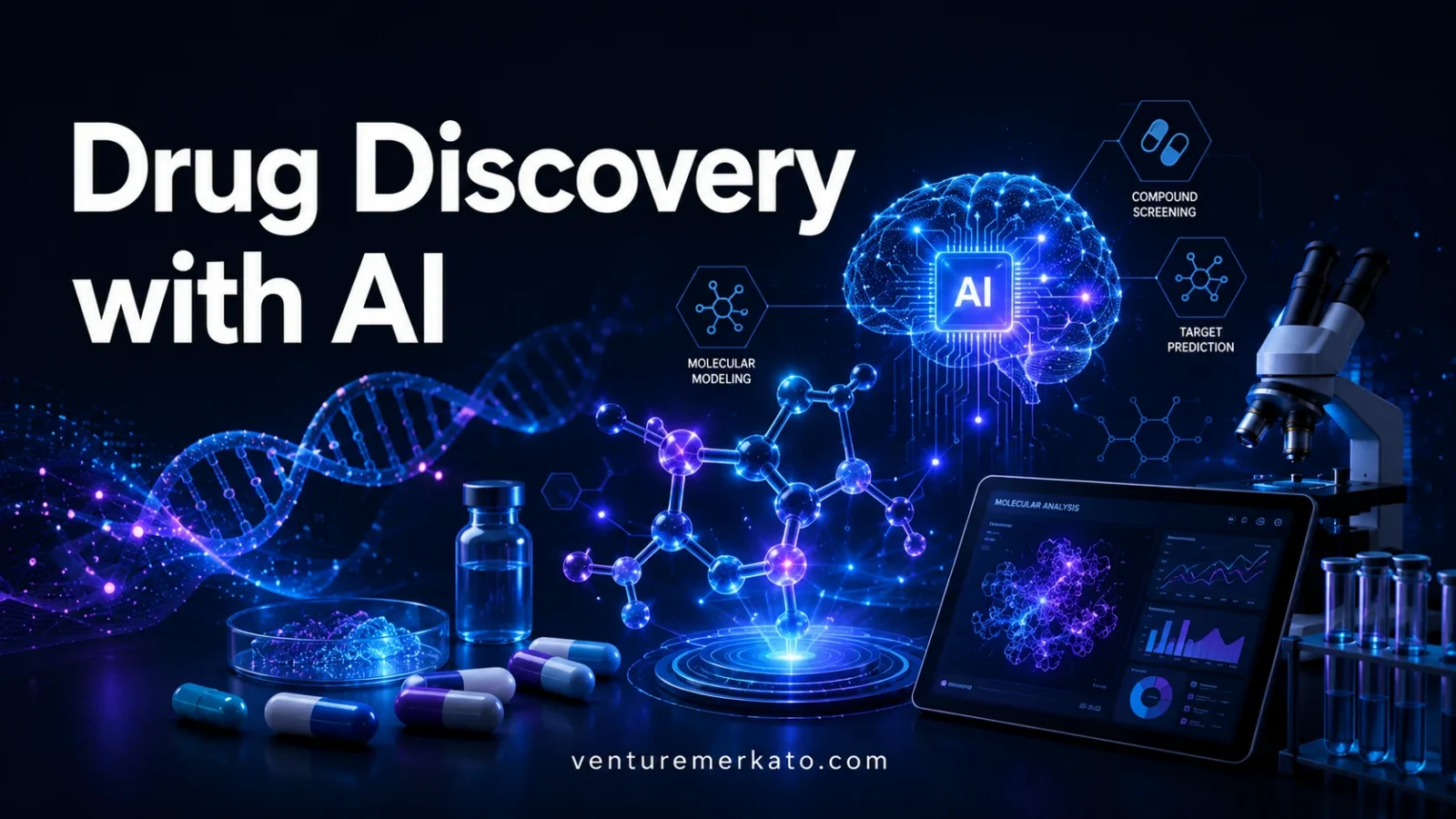

Genome Architect: AI-Driven Design for Synthetic Biology
Welcome, astute investors and forward-thinking innovators! As your advisor in market research and innovation, I’m here today to present a venture designed to thrive at the cutting edge of biological engineering. In an era where data is the new oil, and biology is the new manufacturing platform, the convergence of genomics and advanced data analysis offers unprecedented opportunities.
However, the initial investment landscape can be daunting, especially in deep tech. This proposal outlines a lean, high-impact business idea poised to disrupt the synthetic biology design process, leveraging a uniquely multidisciplinary team with a modest initial capital of just $10,000. This is not just a business; it’s a strategic maneuver to capture value in a rapidly expanding market.
The Business Idea: A Computational Bio-Design Intelligence Platform
Our venture proposes to build a “Computational Bio-Design Intelligence Platform” – a sophisticated, AI-powered advisory system for synthetic biologists and genetic engineers. Think of it as a “robo-advisor” for genetic design, providing data-driven recommendations, risk assessments, and optimization strategies before expensive and time-consuming wet lab experimentation begins.
The core problem we address is the current bottleneck in synthetic biology: the iterative, often trial-and-error nature of designing novel genetic constructs, metabolic pathways, and engineered organisms. Researchers spend countless hours sifting through literature, public databases, and their own experimental data, only to frequently encounter design failures. Our platform will streamline this process, significantly improving success rates and accelerating the pace of innovation in fields ranging from bio-manufacturing and pharmaceuticals to sustainable agriculture.
Why This Idea is Promising
- Explosive Market Growth: The synthetic biology market is projected to grow significantly, driven by advancements in gene editing (CRISPR), DNA synthesis, and rising demand for bio-based products (e.g., biofuels, biomaterials, precision fermentation). This creates a burgeoning client base hungry for efficiency tools.
- Addressing a Critical Pain Point: The high failure rates and extended timelines in synthetic biology R&D represent a substantial cost. By providing in silico optimization and prediction, our platform offers immense value by reducing experimental cycles, material costs, and time-to-market.
- Scalable Business Model: Operating as a Software-as-a-Service (SaaS), our platform offers inherent scalability. Once the core AI models and user interface are developed, the cost of serving additional customers is marginal, allowing for exponential growth without proportional increases in operational expenditure.
- Low Initial Investment for High Impact: By focusing purely on data analysis and computational design, we bypass the need for expensive lab equipment, allowing us to launch with minimal capital. Our value comes from intellectual property, algorithms, and data insights, not physical infrastructure.
- Unique Team Synergy: This is perhaps the most compelling aspect. Our five-person team, despite their seemingly disparate backgrounds, possesses an extraordinary combined skillset perfectly suited to this venture:
- Synthetic Biology Expert: Provides the core domain knowledge, understanding the intricacies of genetic parts, pathways, and engineering principles. This individual ensures scientific rigor and defines the biological problems to solve.
- Precision Farming with Drones/AI Expert: Brings deep expertise in applying AI/ML for complex system optimization, predictive modeling, and data-driven decision-making in biological contexts (e.g., crop yield optimization translates to metabolic flux optimization).
- WealthTech and Robo-Advisors Expert: Crucial for designing an intuitive, user-friendly interface that distills complex genomic data into actionable recommendations. Their experience in risk assessment and personalized automated advice directly translates to predicting genetic design success probabilities and offering tailored optimizations.
- Warehouse Automation Expert: Contributes expertise in managing vast datasets, optimizing data workflows, intelligent indexing of genetic parts/modules, and efficient resource allocation (e.g., computational resources, database queries). This skill set is vital for building a robust data backend.
- Fast Fashion with AI Supply Chain Expert: Offers mastery in demand prediction, rapid iteration, and optimizing complex supply chains. This translates to predicting the “performance” of genetic constructs, rapidly iterating on design variations, and optimizing the “supply chain” of genetic parts for desired outcomes.
The synergy of these skills allows us to build not just a tool, but an intelligent assistant that understands both the biological nuances and the principles of efficient, data-driven optimization and personalized recommendations.
Go-to-Market Strategy: Building Credibility and Traction
Our go-to-market strategy will be carefully phased to build credibility, acquire early adopters, and demonstrate undeniable value before scaling.
- Niche Focus & Early Adopter Program (Months 1-6): We will initially target a very specific niche within synthetic biology, for example, optimizing gene expression in E. coli or yeast for small molecule production. This allows us to deliver a highly effective MVP quickly. We will offer our services to select academic labs and small biotech startups at a heavily discounted rate or even for free in exchange for invaluable feedback and testimonials. These early adopters become our evangelists.
- Content Marketing & Thought Leadership: Our Synthetic Biology expert, supported by the AI/data specialists, will publish insightful blog posts, white papers, and participate in webinars and conferences. This content will educate the market on the challenges of synthetic biology design and demonstrate how our data-driven approach offers superior solutions, establishing us as thought leaders.
- Academic Partnerships & Publications: Collaborating with academic institutions will not only provide real-world data for refining our algorithms but also lead to co-authored publications. This will significantly boost our scientific credibility, a critical factor for adoption in the biotechnology sector.
- Freemium Model / Limited-Time Trials: Once our MVP is robust, we will introduce a freemium tier or time-limited trials. This allows potential users to experience the platform’s value firsthand with minimal commitment, driving wider adoption.
- Targeted Outreach & Conference Presence: We will actively engage with synthetic biology and biotech communities through targeted email campaigns, social media, and attending key industry conferences. Presenting our solution at these events will generate leads and foster networking opportunities.
- Ecosystem Integration: As we mature, we will explore integrations with popular synthetic biology design software and public genomic databases (e.g., NCBI, iGEM parts registry), making our platform a seamless extension of existing workflows.
Action Plan & Initial Financials
Given the $10,000 initial investment, our initial phase will be heavily reliant on sweat equity and the team’s commitment to building something groundbreaking. This budget is for essential startup costs, not salaries for five individuals.
Phase 1: Concept Validation & MVP Development (Months 1-3)
- Goal: Develop a functional Minimum Viable Product (MVP) focusing on a specific design optimization challenge (e.g., promoter selection and gene codon optimization for a target organism).
- Team Focus:
- Synthetic Biology Expert: Define biological requirements, data sources (public genomic databases, scientific literature), and validation criteria.
- Precision Farming/AI & Fast Fashion/AI Supply Chain Experts: Design and implement core AI/ML algorithms for predictive modeling and optimization, focusing on sequence analysis, expression prediction, and pathway efficiency.
- WealthTech/Robo-Advisors Expert: Develop the initial user interface (UI/UX) for inputting design parameters and displaying recommendations intuitively.
- Warehouse Automation Expert: Establish robust data pipelines for integrating public genomic data, managing design iterations, and optimizing database queries.
- Financial Allocation (~$7,500):
- Cloud Computing Credits (AWS, GCP, Azure): $3,000 (essential for AI/ML training and scalable infrastructure; often grants for startups available).
- Developer Tools & Software Licenses (e.g., specific bioinformatics libraries, IDEs): $1,500 (focus on open-source where possible).
- Legal & Administrative (LLC formation, basic contracts, terms of service): $1,500.
- Website & Marketing Assets (domain, hosting, landing page design, initial content creation): $1,000.
- Contingency: $500.
Phase 2: Pilot Programs & Initial Client Acquisition (Months 4-6)
- Goal: Secure 3-5 pilot customers (academic labs/small biotechs) to test the MVP, gather feedback, and generate initial revenue.
- Team Focus: Iterate on the MVP based on user feedback, refine algorithms, begin direct outreach, and prepare for potential grant applications.
- Financial Allocation (Self-funded through pilot revenue/grants):
- Cloud Computing: ~$500/month (scalable with usage).
- Incremental Marketing: ~$200/month (targeted ads, conference attendance if budget allows).
- Team Stipends: Introduce very small stipends if initial revenue permits, showing commitment to the team’s long-term compensation.
- Grant Application Fees/Consulting: Potentially $500-$1,000 for professional grant writing assistance.
Phase 3: Productization & Seed Funding Round (Months 7-12+)
- Goal: Develop a fully featured SaaS platform, expand our market reach, and secure seed funding (e.g., $100,000 – $500,000) to hire full-time staff and scale operations.
- Team Focus: Expand features (e.g., pathway simulation, multi-host optimization), enhance user experience, build a dedicated sales funnel, and actively pitch to angel investors and VCs specializing in biotech/AI.
- Financial Allocation (Post-seed funding): This is where salaries become competitive, infrastructure scales, and a dedicated sales/marketing team is built. The initial $10,000 serves as the ignition fund to get to this critical stage.
Our “Computational Bio-Design Intelligence Platform” represents a lean, impactful, and highly scalable business opportunity at the intersection of genomics, AI, and biological engineering. With a modest initial investment and a powerhouse team, we are poised to become the indispensable “co-pilot” for the next generation of synthetic biology innovators.