
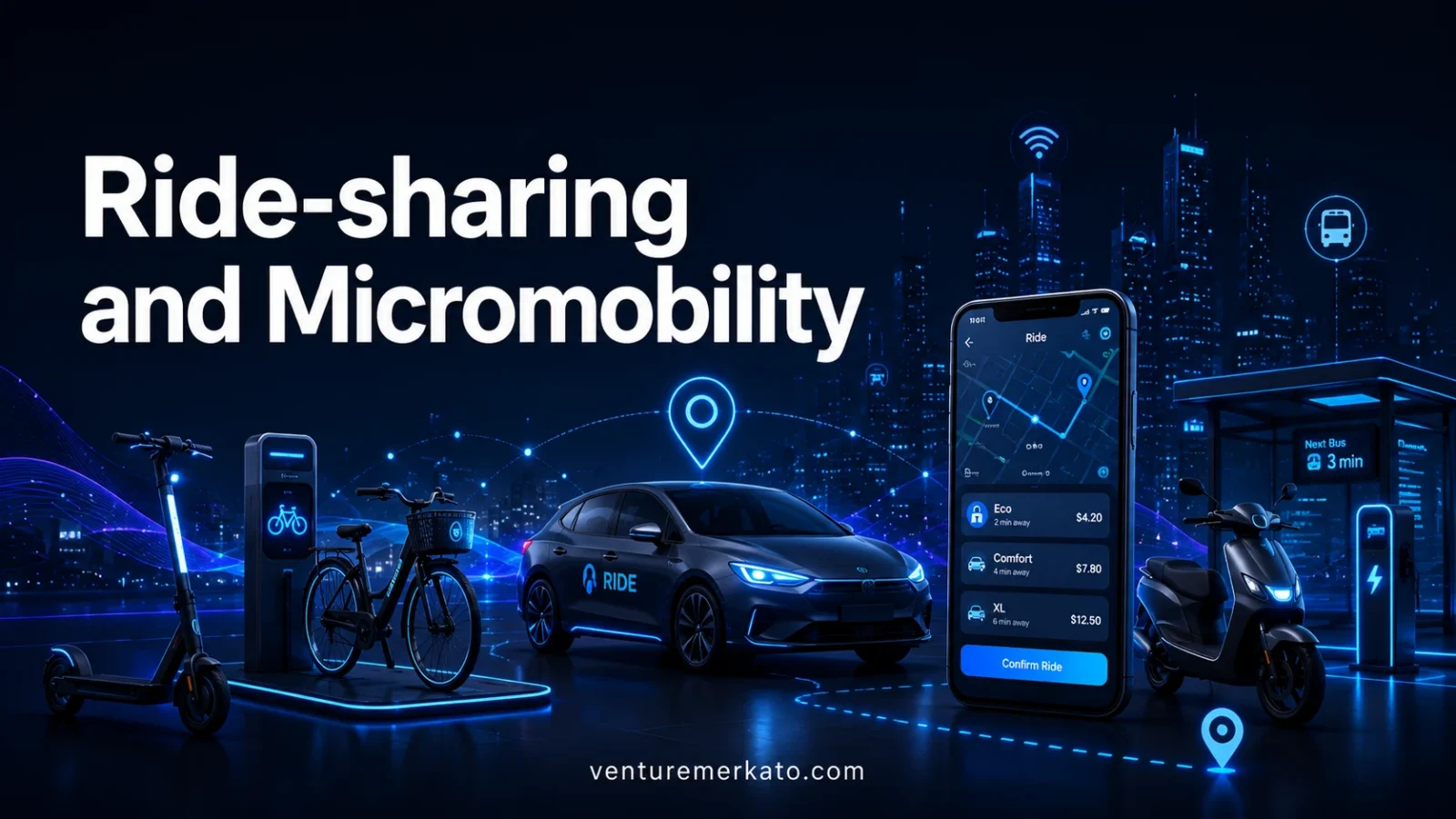

From Concrete to Connection: Architecting Urban Micro-Mobility Hubs
As an advisor to investors, deeply immersed in the evolving landscape of MaaS (Mobility as a Service) and innovation, I’ve observed a critical gap that often undermines the potential of nascent mobility solutions: the physical infrastructure supporting them. While apps and shared fleets are burgeoning, the urban environment frequently struggles to integrate them seamlessly. This presents a tangible opportunity, particularly for an entrepreneur with a strong background in industrials and manufacturing, even with a modest initial investment.
My proposed business idea centers on addressing this fundamental need: Modular, Locally Fabricated Micro-Mobility Hubs.
The Core Idea: Bridging the Physical and Digital in MaaS
The vision is to design, manufacture, and deploy robust, modular parking and organization hubs specifically for micro-mobility vehicles like e-scooters and e-bikes. These aren’t just glorified bike racks; they are thoughtfully engineered solutions that:
- Reduce Urban Clutter: Provide designated, organized spaces for parking, removing vehicles from sidewalks and public pathways.
- Enhance Security: Offer basic security features, deterring theft and vandalism that plague shared micro-mobility fleets.
- Improve User Experience: Make it easier for users to find and return vehicles, fostering greater adoption and satisfaction.
- Support Operators: Streamline fleet management, reduce redistribution costs, and minimize maintenance issues for MaaS operators.
- Lay the Groundwork for Smart Charging: While initial units will focus on parking, the modular design allows for future integration of smart charging capabilities (solar or grid-connected) and telemetry, making them true “smart hubs.”
Crucially, this business leverages the entrepreneur’s “Industrials / Manufacturing” skill set by focusing on efficient design, local sourcing of materials, and lean fabrication processes. With a 10,000 dirham initial investment and a one-person team, the emphasis is on a Minimum Viable Product (MVP) that solves a clear, immediate problem.
Why This Idea Is Promising
- Addresses a Visible Pain Point: Urban landscapes globally are grappling with the unintended consequences of micro-mobility – haphazard parking, sidewalk obstruction, and vehicle damage. This idea directly solves these challenges, benefiting cities, citizens, and MaaS operators alike. It’s a problem everyone can see and understand.
- Leverages Niche Expertise: The entrepreneur’s industrials/manufacturing background is a significant competitive advantage. This isn’t a purely software play; it’s about building durable, practical, and aesthetically pleasing physical infrastructure. This expertise allows for cost-effective prototyping, quality control, and optimized production from day one.
- High Growth Market Tailwinds: Micro-mobility is a rapidly expanding segment within the broader MaaS ecosystem. As more cities and campuses adopt shared e-scooters and e-bikes, the demand for supporting infrastructure will only grow, moving beyond basic racks to integrated, intelligent solutions.
- Low Initial Investment, High Impact Potential: Starting with a lean MVP focused on functionality and durability allows for market entry with just 10,000 AED. The modularity of the design means the solution can scale from a single unit to a complex network as demand and investment grow.
- Clear Path to Differentiation: While simple bike racks exist, truly integrated, secure, and potentially smart micro-mobility hubs are less common. The ability to customize for specific urban aesthetics, offer enhanced security, and plan for future charging integration provides a strong differentiator.
- Sustainability Alignment: By promoting organized parking and efficient vehicle management, these hubs contribute to more sustainable urban mobility practices and a cleaner public realm. The use of locally sourced and potentially recycled materials further enhances this sustainable value proposition.
Breaking Down the Idea & Action Plan (Initial Stages)
The journey from concept to revenue will be meticulously phased, focusing heavily on market validation and lean execution within the tight budgetary constraints.
Phase 1: Research, Design & MVP Prototyping (Months 1-3)
Goal: Validate the need, finalize a lean design, and build a functional MVP prototype.
- Market Research & Validation (Month 1):
- Deep Dive into Local Pain Points: Conduct interviews with MaaS operators in the UAE (e.g., Careem BIKE, Tier, Lime representatives), municipal urban planning departments, university campus facility managers, and property developers. Understand their current challenges with micro-mobility parking, maintenance, and user behavior.
- Competitor Analysis: Research existing solutions globally – what works, what doesn’t, typical pricing, materials used. Identify gaps our solution can fill.
- Stakeholder Mapping: Identify key decision-makers and influencers within target organizations.
- Design & Engineering (Month 2):
- Concept Sketching & CAD Modeling: Utilize personal manufacturing/industrial design skills with accessible CAD software (e.g., FreeCAD, Onshape free tier) to develop modular hub designs. Focus on:
- Durability: Robust materials (e.g., steel, aluminum, treated recycled plastics) suitable for the UAE climate.
- Modularity: Easy assembly, disassembly, and expansion.
- Aesthetics: Integration with urban environments.
- Basic Security: Simple locking mechanisms or designated parking slots.
- Maintenance: Easy to clean and repair.
- Material Sourcing & Costing: Identify local suppliers for chosen materials (metal fabricators, composite suppliers). Obtain quotes for bulk material and specialized fabrication services (cutting, welding).
- Concept Sketching & CAD Modeling: Utilize personal manufacturing/industrial design skills with accessible CAD software (e.g., FreeCAD, Onshape free tier) to develop modular hub designs. Focus on:
- MVP Prototype Fabrication (Month 3):
- Lean Prototyping: Build a single, basic, non-charging hub prototype. This is purely for proof of concept and pilot testing. Leverage local workshops for specialized tasks (e.g., laser cutting, welding) while handling assembly and finishing personally to save costs.
Financial Figures (Initial 10,000 AED Allocation):
- Business Setup & Legal:
- Sole Proprietorship License (DED, depending on Emirate): AED 1,500 – 2,500 (estimate).
- Domain Name (1 year) & Basic Web Hosting (1 year): AED 300 – 500.
- Subtotal: AED 1,800 – 3,000
- Design & Prototyping:
- CAD Software (if not using free tier; e.g., monthly subscription for a basic plan): AED 0 – 200 (prioritize free options).
- Materials for MVP Prototype (steel, fasteners, basic paneling): AED 4,000 – 5,000. This requires very careful selection of simple, readily available materials.
- Local Workshop Fabrication Services (cutting, welding for key components): AED 3,000 – 4,000.
- Basic Hand Tools & Consumables (drill, measuring tape, safety gear, small assembly tools): AED 500 – 1,000.
- Subtotal: AED 7,500 – 10,200
- Contingency: AED 500 – 1,000
Revised Tight Allocation (to stay within 10,000 AED):
- Business Setup: AED 2,000
- Domain/Hosting/Basic Digital Tools: AED 500
- Prototype Materials (extremely lean): AED 4,000
- Prototype Fabrication Services (minimal outsourcing): AED 3,000
- Basic Tools/Consumables: AED 300
- Contingency: AED 200
- TOTAL: AED 10,000
This implies an extremely lean prototype, focusing solely on core structural integrity and basic function, with the entrepreneur performing as much work as possible.
Phase 2: Pilot Deployment & Feedback (Months 4-6)
Goal: Secure a pilot location, install the MVP, gather real-world data and feedback, and refine the design.
- Pilot Location Acquisition:
- Approach pre-identified sympathetic partners (e.g., a small municipality, a university campus, a corporate park facility manager, or even a willing MaaS operator) for a free or heavily discounted pilot placement of the MVP. The value proposition is addressing their clutter issues and providing data.
- Formalize an agreement for data collection and testimonials.
- Installation & Monitoring:
- Install the MVP hub in a strategic, high-visibility location. Document the installation process for future scalability.
- Monitor usage, gather qualitative feedback from users and site managers, and identify any structural or functional issues.
- Design Iteration: Based on pilot feedback, refine the design, exploring minor material changes, improved security features, and preparing for future enhancements like charging.
Financials (Post-initial investment): This phase is primarily leveraging the completed MVP. Further financial input would be needed for significant redesigns or additional prototypes, which would ideally be funded by pre-orders or early seed investment.
Phase 3: Go-to-Market & Initial Sales (Months 7-12)
Goal: Secure first paying customers, establish a scalable production process, and build brand presence.
- Product Offering:
- Develop a clear product catalog based on refined designs: “Standard Parking Hub” (the MVP successor), “Enhanced Security Hub,” and a roadmap for “Smart Charging Hubs.”
- Establish a transparent pricing model (per-unit sale, optional installation service, potential maintenance contracts).
- Targeted Sales:
- Leverage Pilot Success: Transform pilot data, photos, and testimonials into compelling case studies and marketing materials. Show tangible results (e.g., “50% reduction in vehicle clutter,” “improved user satisfaction”).
- Direct Sales to Core Targets: Actively reach out to MaaS operators (as B2B clients), municipal urban planning departments, university campuses, and large property developers/managers. Focus on the benefits specific to each stakeholder.
- Relationship Building: Continue networking at industry events (online and in-person), nurturing relationships established during research.
- Lean Production & Installation:
- Formalize Local Fabrication Partnerships: Establish clear agreements with 1-2 local workshops for manufacturing components based on demand, ensuring quality and timely delivery.
- Streamlined Assembly & Installation: Develop efficient protocols for assembly and installation. Initially, the entrepreneur will oversee or perform installations; later, this can be outsourced or streamlined for client self-installation.
- Digital Presence & Marketing:
- Develop a professional, product-focused website showcasing the hubs, their benefits, case studies, and clear calls to action.
- Utilize LinkedIn for targeted outreach and content sharing, positioning the business as a leader in smart urban infrastructure.
Go-to-Market Strategy in Detail
The go-to-market strategy is founded on demonstrating real-world value quickly and building trust within the niche.
-
“Proof of Concept First” Approach:
- Pilot Partnerships as Cornerstone: The initial focus is not on revenue but on securing non-paid pilot locations for the MVP. These pilots are gold – they provide crucial validation, real-world data, and powerful testimonials.
- Target Selection: Prioritize locations with visible micro-mobility problems and decision-makers open to innovation (e.g., smart city initiatives, eco-conscious campuses, busy transit hubs).
- Value Proposition for Pilots: Offer the hub as a solution to immediate pain points (clutter, maintenance, user experience) and as a contribution to their sustainability goals, in exchange for feedback and public endorsement.
-
Segmented Outreach & Tailored Messaging:
- For MaaS Operators (B2B): Emphasize how the hubs reduce operational costs (less redistribution, charging efficiency), enhance fleet security (reducing theft/vandalism), and improve their service quality/brand image.
- For Municipalities/Urban Planners (B2G): Focus on public safety, reduced urban clutter, improved aesthetics, and supporting sustainable urban development goals. Position the hubs as part of a smarter, more livable city.
- For Property Developers/Managers (B2B): Highlight the added amenity for residents/tenants, improved property aesthetics, efficient space management, and a modern, forward-thinking image.
- Educational Institutions: Focus on campus safety, organization, and promoting eco-friendly transport among students and staff.
-
Digital & Relationship Marketing (Lean & Focused):
- Professional Online Presence: A clean, functional website is essential, showcasing the product with high-quality visuals, technical specifications, and most importantly, pilot case studies.
- LinkedIn Dominance: Leverage LinkedIn for thought leadership, connecting directly with decision-makers in target organizations (urban planners, facility managers, MaaS executives), and sharing insights on urban mobility challenges and solutions.
- Industry Events: Attend relevant smart city, urban planning, and transportation conferences (initially free or low-cost options) to network and present the solution.
- Content Marketing: Publish blog posts (on the website and LinkedIn) discussing micro-mobility challenges, solutions, and the benefits of organized infrastructure. Document the design and manufacturing process to showcase expertise.
-
Phased Product Introduction & Pricing:
- MVP First (Parking Focus): Start with the basic, robust parking hub.
- Modular Upgrades: Offer upgrades for enhanced security (e.g., smart locking mechanisms) and eventually smart charging capabilities as separate SKUs or add-ons.
- Flexible Pricing: Offer outright purchase, potentially installation services, and explore long-term maintenance contracts for recurring revenue. For larger deployments, discuss bulk discounts or financing options.
This strategic approach ensures that every dirham of the initial investment is maximized to create a tangible product, validate its market fit, and build a foundational pipeline for a sustainable and scalable business. The “From Concrete to Connection” journey begins with meticulous planning and leverages a specialized skill set to build the physical backbone of future mobility.