
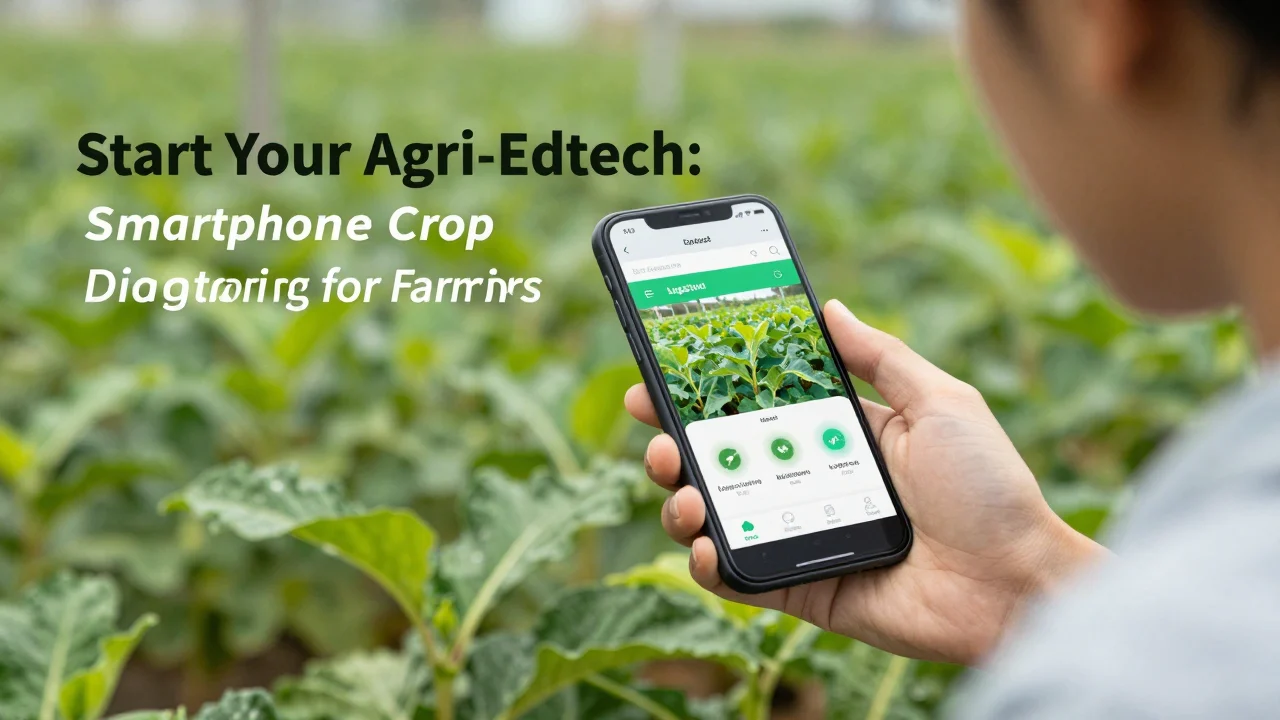

Cultivating Knowledge: Empowering Farmers with Smartphone-Guided Visual Diagnostics
In a world increasingly reliant on technology for efficiency, the agricultural sector often sees sophisticated, high-cost solutions proposed for every challenge. From AI-driven drones to satellite imagery and complex sensor networks, the innovation landscape for crop monitoring tools is rich, yet often out of reach for many, especially smallholder farmers or burgeoning urban gardeners. As an advisor to investors, I’m frequently asked to spot opportunities that bridge innovation with accessibility, particularly under tight constraints.
Today, I propose a business idea that disrupts the traditional notion of “crop monitoring tools” by shifting the focus from expensive hardware to accessible knowledge, leveraging existing resources, and embracing the power of education technology (EdTech). Imagine launching a venture in the bustling agricultural landscape of the UAE, or any region, with just 500 dirhams and a single individual whose core expertise lies in EdTech. Sounds impossible? Not if we redefine what a “tool” can be.
The Core Idea: The Smartphone-Empowered Farmer
Our business concept is “The Smartphone-Empowered Farmer: Visual Diagnostics through EdTech.” It’s not about selling a new gadget, but about empowering farmers to become their own primary diagnostic experts using the most ubiquitous piece of technology they already own: their smartphone. We will provide structured, easily digestible educational content and a supportive community framework that teaches visual crop health assessment. This makes the farmer’s eye, augmented by educational guidance and their smartphone camera, the ultimate low-cost, high-impact “crop monitoring tool.”
The value proposition is simple yet profound: instead of investing in costly equipment to tell them what’s wrong, farmers learn how to identify early signs of pests, diseases, nutrient deficiencies, and environmental stress themselves. This knowledge leads to quicker, more informed decisions, reduced crop loss, and minimized unnecessary input costs. Our EdTech expertise will transform complex agricultural science into practical, actionable visual guides, checklists, and interactive learning modules.
Why This Idea is Promising
- Addressing a Massive Unmet Need: Many small to medium-sized farmers globally, and certainly hobbyists and urban gardeners, lack the capital for high-tech crop monitoring. They often rely on trial and error, delayed expert advice, or simply losing crops. Our solution provides immediate, accessible, and self-reliant diagnostic capabilities.
- Leveraging Ubiquitous Technology: Smartphones are nearly universal. We bypass the need for farmers to acquire new hardware, significantly lowering their barrier to entry and adoption. The “tool” is their existing device, empowered by our educational content.
- Scalability and Reach through EdTech: As an EdTech specialist, my core skill is designing effective learning experiences. Educational content can be disseminated widely and at minimal cost through digital platforms. Once created, it can serve thousands, creating an inherently scalable business model without needing a physical product inventory or complex logistics.
- Low Initial Investment (500 AED): This constraint is not a limitation but a design principle. Our focus on digital content, free platforms, and leveraging existing farmer assets means nearly zero hardware or software procurement costs. The investment goes into content creation, minimal outreach, and validation.
- Community-Driven Learning: The EdTech approach isn’t just about static content; it’s about fostering interaction. A peer-to-peer learning community, moderated by an expert, can amplify knowledge sharing and problem-solving, creating a network effect.
- Sustainable and Empowering: We are not selling a quick fix but imparting lasting knowledge and skills. This empowers farmers to become more resilient and self-sufficient, a crucial factor for long-term agricultural sustainability.
- Future Monetization Pathways: While starting free, this model creates multiple avenues for future revenue, from premium content and advanced workshops to personalized consultations, affiliate partnerships with input suppliers, or even anonymized data insights (with consent) for agricultural research.
Breaking Down the “Tool”
Our “crop monitoring tool” isn’t a device; it’s a comprehensive educational framework designed for practical application:
- Visual Diagnostic Guides: High-quality images and short videos demonstrating common pest infestations, disease symptoms, and nutrient deficiencies across key crops (e.g., date palms, vegetables, herbs common in the UAE). These guides will highlight specific visual cues (e.g., leaf discoloration patterns, spots, insect presence, growth abnormalities).
- Interactive Checklists & Flowcharts: Simple, step-by-step digital (PDF or web-based) checklists that guide farmers through a diagnostic process. For instance, “Is your leaf yellowing from the edges or veins?” leading to “If edges, check for potassium deficiency; if veins, check for iron deficiency.”
- Smartphone Photography Best Practices: Tips on how to take clear, diagnostically useful photos of plant issues using a smartphone camera (lighting, focus, angles).
- Observation Logs: Simple templates for recording observations over time, allowing farmers to track changes and assess the effectiveness of interventions. This can be as basic as a digital form or a printable sheet.
- Community Support Forum: A free online group (e.g., WhatsApp, Facebook, Telegram) where farmers can share photos of their troubled plants, ask questions, and receive feedback from peers and a moderator (myself).
Action Plan: The First 90 Days
Our initial 90-day plan is hyper-focused on validation, content creation, and building a foundational community, all within the stringent 500 AED budget.
Phase 1: Validation & Core Content Development (Days 1-30 | Estimated Spend: 200 AED)
- Market Research & Niche Identification (50 AED): Conduct online research, engage in free online forums (gardening groups, farmer communities in UAE/MENA), and conduct informal interviews with 5-10 local urban gardeners or small farmers. Identify their biggest pain points regarding crop health diagnosis and what specific crops they cultivate. Budget: Primarily for internet data and local transport for informal chats.
- Curriculum Design & Content Outline: Based on research, outline 3-5 initial core modules focusing on the most common visual issues for 1-2 popular crops. Prioritize easily identifiable problems.
- Content Creation (150 AED):
- Visual Assets: Use my smartphone camera for photos and videos (local nurseries, public gardens, personal plants). Utilize free stock image sites (Unsplash, Pexels) for supplementary visuals.
- Text & Infographics: Develop clear, concise explanatory text. Use free design tools like Canva (free tier) for creating engaging infographics and visual checklists.
- Platform Setup: Create a free blog (e.g., WordPress.com, Blogger) or a dedicated section on a free online community platform (e.g., Medium, Substack free tier, or simply a dedicated Facebook Page/Group). This will host our initial content. Budget: Primarily for occasional printouts for direct feedback, and small tools if needed (e.g., basic tripod mount for phone if filming steady video).
Phase 2: Pilot Program & Community Building (Days 31-60 | Estimated Spend: 150 AED)
- Recruit Pilot Users (50 AED): Approach 10-20 local gardeners, small farm owners, or agricultural students. Offer them early access to the content and personalized support in exchange for detailed feedback. Leverage existing networks, local community groups, or direct approaches at nurseries. Budget: Small tokens of appreciation, printing flyers if allowed.
- Launch Initial Modules: Release the first set of visual diagnostic guides and checklists on the chosen free platform.
- Establish Community Platform (0 AED): Create a dedicated free WhatsApp group or Facebook group for pilot users. Actively moderate, encourage photo sharing, and provide initial diagnostic support and learning prompts. This is where the interactive “monitoring tool” aspect truly comes alive.
- Feedback Collection: Implement simple feedback forms (Google Forms) to understand usability, effectiveness, and identify areas for improvement.
- Content Iteration: Begin refining content based on pilot feedback, adding new visuals or clarifying instructions.
Phase 3: Refinement, Outreach & Early Monetization Exploration (Days 61-90 | Estimated Spend: 150 AED)
- Content Expansion & Refinement: Develop 2-3 new content modules based on pilot user needs and observed common issues. Integrate feedback to make existing content even more user-friendly.
- Broader Outreach (100 AED):
- Organic Social Media: Consistently post engaging content, tips, and success stories from the pilot group on Instagram, Facebook, and potentially TikTok (short visual guides). Focus on hashtags relevant to UAE gardening/farming.
- Local Partnerships: Explore partnerships with local plant nurseries or garden centers. Offer free introductory workshops in exchange for visibility and customer referrals.
- Guest Blogging/Online Contributions: Offer to write short articles for local gardening blogs or community websites.
- Early Monetization Exploration (50 AED): While core content remains free, begin conceptualizing a “premium” offering. This could be a more in-depth guide on a specific crop, a personalized one-on-one virtual consultation session, or a small digital product (e.g., a printable yearly crop health planner). Announce these as “coming soon” to gauge interest. Budget: Small amount for potential social media boosting or simple advertising of “coming soon” features.
Updated Financial Figures (Cumulative within 500 AED for the first 90 days):
- Market Research & Local Travel: 100 AED
- Content Creation Tools (Software/Hardware): 0 AED (using free apps, personal smartphone)
- Printing/Pilot Materials: 50 AED
- Platform Hosting/Domain: 0 AED (using free blog platforms/social media)
- Organic Social Media/Outreach (minor boosting, if any): 150 AED
- Miscellaneous Buffer: 200 AED
- Total: 500 AED
This budget is extremely lean, relying heavily on my time, EdTech skills, and free digital tools. Every dirham is carefully allocated to high-impact activities.
Go-to-Market Strategy: Reaching Our First Users
Our go-to-market strategy will be highly organic, community-focused, and leverage the power of visual communication inherent in EdTech.
- Target Audience:
- Phase 1 (Initial 3-6 months): Urban gardeners, hobby farmers, small family farms, and agricultural students in the UAE (especially Dubai, Abu Dhabi, Sharjah). This segment is tech-savvy, open to learning, and actively seeking solutions for their often limited space and resources.
- Phase 2 (Growth): Expand to small-to-medium commercial farms that are looking for cost-effective ways to train their staff in early detection.
- Key Channels:
- Social Media (Instagram, Facebook, WhatsApp, YouTube): These platforms are highly visual, making them ideal for demonstrating plant diagnostics. Short, engaging video tutorials, infographics, and “before & after” shots of treated plants will be central. A dedicated Facebook or WhatsApp group will be the primary community hub.
- Free Blog/Knowledge Hub: Our central repository for comprehensive guides, articles, and downloadable resources. Optimized for search engines with relevant keywords (e.g., “date palm disease identification UAE,” “tomato plant problems Dubai”).
- Local Partnerships: Collaborating with local plant nurseries, garden centers, community gardens, and agricultural extension offices in the UAE. Offering free workshops or content demonstrations can be a powerful way to gain trust and reach.
- Word-of-Mouth: Encourage pilot users and early adopters to share their success stories. Testimonials and referrals will be invaluable.
- Messaging:
- “Transform Your Smartphone into Your Smartest Gardening Tool.”
- “Unlock the Secrets of Healthy Plants: Learn to Read Your Crops.”
- “Empower Yourself: Master Visual Plant Diagnostics with Our Free Guides.”
- “Join a Community of Green Thumbs: Share, Learn, Grow Together.”
- Initial Offering: All core educational modules, visual guides, and access to the community forum will be free initially. The focus is on building trust, demonstrating value, and accumulating a user base.
The Future: Evolution and Monetization
Once a strong foundation is built and we’ve demonstrated significant value to our user base, the path to monetization becomes clear:
- Premium Content & Courses: Offer advanced modules on specific crops, integrated pest management (IPM) strategies, or seasonal crop planning.
- Personalized Consultations: One-on-one virtual diagnostic sessions or tailored advice packages for more complex issues.
- Affiliate Marketing: Partner with local agricultural suppliers (e.g., for organic pesticides, specialized fertilizers, beneficial insects) and recommend their products within our content, earning a commission.
- Workshops & Training Programs: Conduct paid online or in-person workshops for groups, agricultural cooperatives, or even corporate sustainability programs.
- Data Insights (with Consent): Aggregate anonymized data on common crop issues in specific regions to provide valuable insights to agricultural researchers or policymakers.
- Subscription Model: A tiered subscription offering access to exclusive content, priority support, or advanced features (e.g., a more sophisticated online observation log).
This idea, born from stringent constraints, is a testament to the power of re-imagination and leveraging core competencies. By focusing on EdTech, community, and accessible knowledge, we can build a highly impactful and scalable business that empowers farmers to cultivate not just crops, but also their own expertise. The “Smartphone-Empowered Farmer” is more than a business; it’s a movement towards more informed, resilient, and sustainable agriculture, starting with just 500 dirhams and a single vision.