
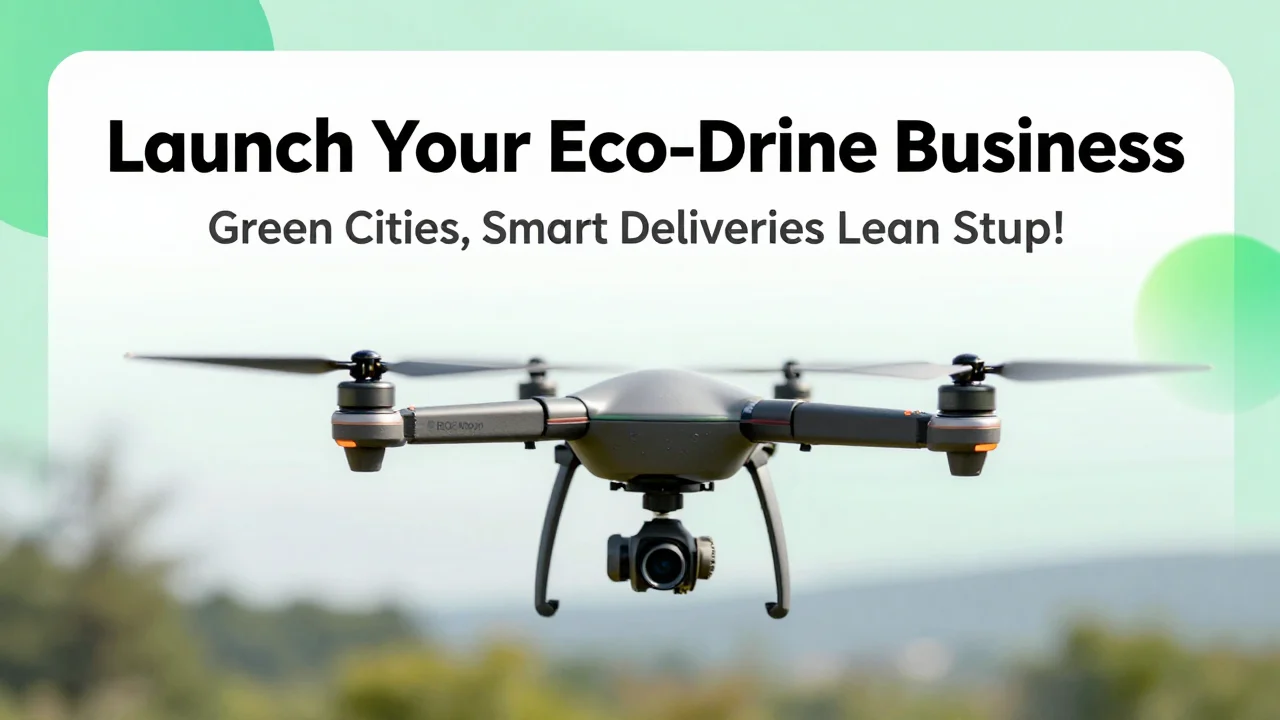

Green Skies Collective: Enabling Sustainable Urban Micro-Logistics & Eco-Monitoring
The urban landscape is a vibrant, complex ecosystem. As cities grow, so does the demand for efficiency, sustainability, and quality of life. Urban Air Mobility (UAM), often imagined as fleets of air taxis, holds a far broader, more immediate potential: transforming how we monitor, maintain, and interact with our urban environment from a hyper-local, sustainable perspective. As advisors to investors, we present a business idea that leverages this nuanced potential, creating value at the intersection of environmental intelligence, micro-logistics, and smart urban infrastructure, all while operating within a remarkably lean initial investment and a diverse, skilled team.
This venture, which we’ll call “Green Skies Collective,” isn’t about building the next generation of eVTOLs. Instead, it’s about building the nervous system and the ethical framework for small-scale, sustainable drone operations that address critical urban needs: enhancing green spaces and facilitating eco-conscious last-mile delivery.
The Business Idea: Green Skies Collective
Green Skies Collective is a technology and service platform designed to facilitate and manage hyper-local, sustainable drone operations for two synergistic primary functions within urban environments:
-
Eco-Monitoring & Urban Greening Support: We will deploy or coordinate small, energy-efficient drones to conduct detailed environmental data collection in urban green spaces, parks, community gardens, vertical farms, and even neglected urban plots. This includes capturing high-resolution imagery, thermal scans, and potentially air quality data. The collected data will then be analyzed by our experts to provide actionable insights on vegetation health (e.g., identifying water stress, nutrient deficiencies, pest infestations via NDVI analysis), soil moisture levels, overall ecological vitality, and even urban heat island effects. These insights will be delivered as comprehensive reports and interactive dashboards to urban planners, property managers, community garden associations, and environmental NGOs, empowering them to make data-driven decisions for healthier, more resilient urban ecosystems. The “Soil Health and Biostimulants” expert on our team will be crucial in translating this raw data into tangible, practical recommendations for urban agricultural practices and green space management.
-
Sustainable Micro-Logistics: Concurrently, the platform will enable ultra-efficient, last-mile drone delivery for specific, low-weight, high-value, or time-sensitive goods that align with urban sustainability goals. Imagine delivering organic seeds and small gardening tools to a community garden, biodegradable composting kits to households, essential repair parts for green infrastructure, or hyper-local artisanal products from sustainable businesses. A core principle here is the mandatory use of biodegradable packaging, integrating the “Biodegradable Materials” skill directly into the service offering. The emphasis is on micro – avoiding competition with large-scale commercial drone delivery, and instead serving niche, eco-conscious markets and community needs where speed, precision, and environmental impact are paramount.
Essentially, Green Skies Collective acts as a trusted orchestrator: providing the intelligence for urban greening and enabling the sustainable movement of goods that support it, all while leveraging the efficiency of small-scale UAM.
Why This Idea is Promising
- Low Barrier to Entry, High Impact: With a lean initial investment, we are not developing new drone hardware. Instead, we are building a service platform and leveraging existing, affordable prosumer/commercial small drones. This drastically reduces R&D costs and time-to-market, focusing resources on data analysis, software development, and community engagement.
- Alignment with Mega-Trends: Global cities are increasingly prioritizing green infrastructure, smart city initiatives, climate resilience, and sustainable living. This business directly addresses these priorities by providing crucial data for urban planning and facilitating eco-friendly commerce. The UAE, in particular, has strong commitments to sustainability and smart city development (e.g., Dubai’s 2040 Urban Master Plan), making it an ideal proving ground.
- Addresses a Clear Niche: We are not competing head-on with large logistics players or aspiring air taxi operators. Our focus is hyper-local, sustainable, and community-centric. This allows us to cultivate strong relationships with specific segments (municipalities, community groups, eco-retailers) that are often underserved by traditional UAM models.
- Synergistic Team Skills: The diverse expertise of our six-person team is not just a collection of individuals but a powerful, integrated unit:
- Biodegradable Materials: Ensures our micro-logistics are genuinely sustainable and provides consultancy on eco-friendly drone components.
- Soil Health and Biostimulants: Translates complex environmental data into actionable insights for urban greening, a unique value proposition.
- On-demand and Usage-based Insurance: Critical for de-risking drone operations for ourselves and partners, offering flexible, cost-effective coverage.
- Retail Media Networks: Monetizes anonymized insights from urban activity for targeted “green” advertising opportunities, and builds partnerships with eco-conscious retailers.
- Energy / CleanTech / GreenTech / Sustainability: Ensures all operations are optimized for minimal environmental footprint, from charging infrastructure to carbon accounting.
- Property Management Software: Develops the robust backend for managing access to urban spaces (rooftops for landings, green zones for monitoring), scheduling, and optimizing drone deployment.
- Data as a Valuable Asset: The environmental data collected (vegetation health, soil metrics, urban thermal profiles) is incredibly valuable for urban planning, real estate development (green certifications), and academic research. The logistics data also offers insights into sustainable consumption patterns. This data can be monetized through reports, dashboards, or anonymized insights.
- Community & Brand Value: By directly contributing to healthier urban environments and facilitating sustainable commerce, Green Skies Collective builds significant goodwill, fosters community engagement, and positions itself as a leader in ethical, responsible UAM.
Go-to-Market Strategy
Our strategy is designed for rapid validation, minimal upfront capital expenditure, and agile iteration, focusing on a phased rollout.
Phase 1: Pilot & Proof of Concept (Months 1-4) – Localized & Targeted
- Target Market: Select a single, progressive urban district, master-planned community, or specific municipality in the UAE known for its commitment to sustainability and green initiatives (e.g., a community within Dubai or Abu Dhabi with active green spaces and community gardens).
- Initial Offerings:
- Eco-Monitoring Pilot: Partner with the local municipality or a prominent community garden association to conduct weekly or bi-weekly drone flights over a designated park or community garden. Provide detailed reports on vegetation health, soil moisture, and pest detection using our platform. The “Soil Health” expert will deliver a tangible improvement plan.
- Micro-Logistics Pilot (Limited): Partner with one small, eco-conscious local retailer (e.g., a plant nursery, an organic produce supplier, or a sustainable crafts shop) for a limited number of “green” last-mile deliveries (e.g., seeds, small plants, biodegradable products) using our platform and biodegradable packaging.
- Partnerships: Actively pursue memoranda of understanding (MOUs) with local government entities, community associations, and a select eco-retailer. Our “Retail Media Networks” specialist will lead engagement, identifying mutually beneficial advertising or data-sharing opportunities.
- Insurance Integration: The “On-demand Insurance” expert will develop and implement the preliminary insurance framework for pilot operations, demonstrating dynamic coverage.
- Validation Metrics: Track improvements in green space health (based on our recommendations), delivery efficiency, customer satisfaction, and operational costs.
Phase 2: Refine & Expand (Months 5-12) – Niche City-wide Expansion
- Geographic Expansion: Expand pilot programs to additional parks, community gardens, or even commercial properties with green roofs across the selected city.
- Service Expansion: Introduce additional features to the platform, such as real-time dashboards for partners, predictive analytics for environmental issues, and a wider range of micro-logistics partners and delivery categories.
- Monetization Refinement: Based on pilot data, refine pricing models for Eco-Monitoring subscriptions/reports and micro-logistics services. Begin exploring premium data access for urban developers or environmental consultants.
- Brand Building: Showcase successful case studies through local media, sustainability forums, and direct outreach. The “Retail Media” expert will explore hyper-local sponsorship opportunities around green initiatives.
Phase 3: Scale & Diversify (Beyond 12 Months) – Regional & Platform Licensing
- Regional Expansion: Begin exploring opportunities in other cities within the UAE and potentially the broader GCC, either directly or through a licensing/franchise model for our platform and methodology.
- New Revenue Streams: Introduce specialized consulting services for green infrastructure planning, carbon footprint analysis for urban UAM, and advanced environmental impact assessments.
- Technological Advancement: Invest in integrating more advanced sensor technologies (e.g., multispectral, hyperspectral) as capital allows, further enhancing data insights.
Action Plan & Updated Financial Figures (Initial 6 Months)
Our 15,000 AED initial investment demands extreme fiscal discipline and a focus on essential setup and proving the concept rapidly through sweat equity. The team’s commitment to working without immediate salary is fundamental to this model.
Team Allocation & Initial Roles:
- Overall Lead / Business Development (Shared Role): Driving vision, strategy, securing partnerships, and future fundraising.
- Operations & Tech Lead (Property Management Software): Platform development (MVP for scheduling, access), drone operations management, logistics optimization.
- Environmental Intelligence Lead (Soil Health & Biostimulants): Data analysis from drone imagery, generating ecological insights, developing actionable recommendations.
- Sustainability & Materials Lead (Biodegradable Materials / Energy & Sustainability): Ensuring sustainable operations, sourcing biodegradable packaging, carbon footprint analysis.
- Risk & Compliance Lead (On-demand & Usage-based Insurance): Developing insurance frameworks, ensuring regulatory adherence, legal counsel.
- Partnerships & Marketing Lead (Retail Media Networks): Identifying and securing pilot partners, developing outreach materials, exploring data monetization.
Initial Investment Breakdown (15,000 AED):
- Legal & Business Registration (Approx. 5,000 AED): This is a critical and non-negotiable expense in the UAE, covering trade licenses, permits, and initial company registration.
- Basic Web Platform / SaaS Tools (Approx. 2,000 AED): Subscriptions for essential cloud services (AWS/Azure credits for startups, Google Workspace, Trello/Asana for project management, basic low-code tools for MVP development).
- Prosumer-Grade Drone (1 Unit) (Approx. 3,000 AED): Acquisition of a reliable, easy-to-operate drone (e.g., DJI Mini 3 Pro or similar) capable of high-resolution photogrammetry and video for initial Eco-Monitoring pilot projects. This is essential to generate our own proof-of-concept data without immediate reliance on external drone service providers.
- Software Licenses for Data Analysis (Approx. 1,000 AED): Initial licenses for GIS software (e.g., QGIS, ArcGIS for personal use) and image processing software required for vegetation index analysis and mapping.
- Marketing & Outreach Materials (Approx. 1,000 AED): Development of a simple website/landing page, professional pitch deck, brochures, and costs for initial networking events.
- Contingency & Petty Cash (Approx. 3,000 AED): Essential buffer for unforeseen expenses, minor equipment needs, initial travel for meetings, and administrative costs.
Action Plan (Initial 6 Months):
Month 1-2: Foundation & Validation
- Company Formation: Complete all legal registrations and licensing (5,000 AED).
- Team Alignment: Solidify roles, responsibilities, and communication protocols.
- Market & Needs Assessment: Deep dive into specific urban sustainability challenges in 2-3 target districts/communities within the chosen UAE city. Identify key municipal contacts, community garden leaders, and potential eco-retailers.
- Tech Stack Outline: Design the architecture for the MVP platform, focusing on minimal features for pilot.
- Drone Acquisition & Basic Certification: Purchase the prosumer drone (3,000 AED). The Operations Lead and Sustainability Lead will undertake basic drone pilot training/certification.
- Initial Partner Outreach: Begin introductory meetings with potential pilot partners.
Month 3-4: MVP Development & Pilot Launch
- Platform MVP Build: Develop a basic web-based dashboard for displaying environmental data (e.g., NDVI maps), a simple scheduling interface for drone flights, and a basic portal for partners to request insights/deliveries. (2,000 AED for SaaS tools/hosting).
- Insurance Framework: The Risk & Compliance Lead drafts initial terms for on-demand insurance for pilot operations.
- Eco-Monitoring Pilot 1: Conduct initial drone flights over the first selected urban green space (e.g., a community park). Collect imagery, process data, and generate the first draft “Soil Health” report for the partner. (1,000 AED for software licenses).
- Sustainable Packaging Sourcing: Research and establish relationships with suppliers of certified biodegradable packaging for future micro-logistics.
Month 5-6: Refinement & Early Feedback
- Pilot Expansion: Launch Eco-Monitoring Pilot 2 in another green space. If successful, initiate a very limited Sustainable Micro-Logistics pilot with one eco-retailer using biodegradable packaging.
- Feedback & Iteration: Collect intensive feedback from pilot partners on the usefulness of Eco-Monitoring reports and the efficiency of micro-logistics. Use this to refine the platform and service offerings.
- Partnership Formalization: Convert successful pilot collaborations into formal agreements or letters of intent.
- Financial & Growth Strategy Review: Analyze initial operational data and partner feedback to project early revenue potential. Begin preparing a detailed business plan and pitch deck for potential seed funding. This funding will be crucial for scaling, expanding the team, and covering salaries.
This initial phase, costing 15,000 AED, is entirely dedicated to proving the concept, generating tangible results, and establishing foundational partnerships. It’s a testament to lean innovation, where the collective intelligence and dedication of the team are the primary drivers of value creation. By intelligently combining sustainable urban mobility with environmental intelligence and smart logistics, Green Skies Collective is positioned to carve out a unique and highly relevant niche in the evolving urban landscape.